Forecasts
Activity is picking up across all prime regions outside of London, in part due to realistic pricing. But high taxes and uncertainty remain a drag on progress

.png)
Activity is picking up across all prime regions outside of London, in part due to realistic pricing. But high taxes and uncertainty remain a drag on progress
Across the UK, any conversation about the local prime housing market will inevitably centre on two common themes: taxation and uncertainty. However, step beyond central London – to the townhouses, farmhouses and manor houses that make up the prime market across the rest of the UK – and the residential market is influenced by very different drivers and buyer profiles.

Source: Savills Research
Note: These forecasts apply to average prices in the secondhand market. New build values may not move at the same rate
Prime London’s wealth belts
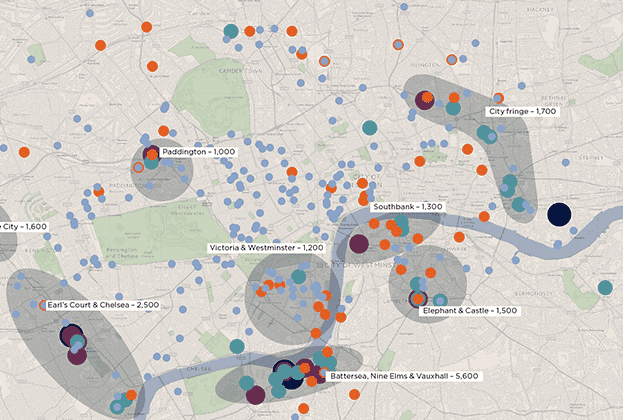
More dependent on domestic wealth generation and access to borrowing than prime central London, the other prime London markets are more traditionally associated with full-time, owner-occupier demand. In central London, only one-quarter of buyers of prime housing use a mortgage. Across these other prime London markets, it’s more than half.
The buying power in these markets is linked to wealth generation from high-value sectors of the capital’s economy, such as, but not confined to, the financial and insurance sector.
London’s evolution as a Tech City is likely to help underpin demand. However, the outlook for other prime London is reliant, to a large extent, on the capital maintaining its status as a global financial centre.
Although business confidence remains comparatively weak since the Brexit vote, our view is that office-based employment in London will continue to grow for the foreseeable future, as Mat Oakley, Head of Commercial Research, Savills, explains in ‘Driving demand’.
In the meantime, the market will remain price sensitive and driven by needs-based purchases
Savills Research
Prime regional markets
Beyond the capital, there has not been the same downward pressure on prices. Yet there remains a lack of urgency among buyers. There are early indicators that activity is beginning to pick up across all the prime regions, in part as a result of more realistic pricing.
Prices in the capital’s commuter belt are unlikely to see much growth until confidence returns to the London market.
The market beyond this is less affected by the stamp duty changes and not as reliant on equity coming out of the capital. The wealth generated in the local economy and, in some cases, demand from second-home buyers, are stronger drivers of price growth.
Outlook for the next five years
We expect the prime markets of London to return to growth as the uncertainty clears. However, given the changed economic and tax environment, it may not be the kind of double-digit growth that we have seen when markets have bounced back in the past. In the meantime, the market will remain price sensitive and driven by needs-based purchases.
But buyers will not put major financial decisions on hold forever. When confidence returns, a renewed flow of buyers will feed demand in the key commuter markets and beyond. When that will be, though, is hard to predict.
In the market beyond London, the relative value offered in most prime regional markets compared with the capital is likely to underpin future price growth.
To summarise, we don’t expect much upward pressure on house prices. High taxes are still acting as a drag on the market. The continued uncertainty is impacting buyer appetite. The price gap will drive demand into the commuter zone and beyond as confidence returns. In the meantime, realistic pricing is key.
.png "Regional split")
Regional split Defining the UK’s prime markets
Source: Savills Research
8 other article(s) in this publication


.png)

.png)